
Why Is My Kitchen Sink Drain Clogged?
You've probably wondered why your kitchen sink drain keeps clogging, and the reasons may surprise you. It's often a mix of grease, soap scum, hair, and improperly disposed food items. Grease solidifies in your pipes, soap scum narrows the drain's diameter, and hair accumulates over time. Even small food particles and non-biodegradable items like coffee grounds can contribute to stubborn blockages. But what about less obvious culprits like poor installation or tree roots? Understanding the full range of causes can help you prevent future clogs and keep your kitchen running smoothly.
Common Causes

A clogged kitchen sink drain is often caused by a combination of common household materials. You'll frequently find that grease, soap scum, and hair are the main culprits. Grease from cooking can solidify inside your pipes, leading to a sticky buildup that traps other debris. Soap scum forms when soap combines with minerals in the water, creating a residue that narrows the drainpipe's diameter over time. According to essential tips for effective drain cleaning, using hot water and dish soap can sometimes help dissolve minor grease buildups.
Hair may seem more like a bathroom issue, but it often finds its way into kitchen drains, especially if you're washing pets or grooming over the sink. These strands can form tangled clumps that impede water flow. Additionally, small particles from food waste and other kitchen debris can accumulate and create blockages.
Another common cause is the improper disposal of non-biodegradable items like paper towels, cotton balls, and plastic wrappers. These materials don't break down in water and can easily cause a clog. Even coffee grounds, which might seem harmless, can compact and create a dense barrier in your pipes.
Regularly cleaning your sink and being mindful of what goes down the drain can help you avoid these common causes of clogs.
Food Residues
Food residues are a major contributor to kitchen sink clogs. When you wash dishes, tiny bits of food inevitably make their way down the drain. Over time, these particles accumulate, reducing the flow of water and eventually leading to a blockage. Common culprits include rice, pasta, and fibrous vegetables that don't break down easily in water. Additionally, food particles can attract grease and oil, which further complicate the clogging issue.
To prevent this, make certain you scrape your plates thoroughly before rinsing them in the sink. A sink strainer can also be invaluable, catching larger particles and preventing them from entering the drain. Another practical step is to periodically flush your drain with hot water. This helps to dislodge food particles that may be starting to build up. You can also use a mixture of baking soda and vinegar to clean the drain. Pour half a cup of baking soda down the drain, followed by half a cup of vinegar. Let it sit for 15 minutes, then flush with hot water.
In addition, avoid using your garbage disposal for fibrous or starchy foods, as these are more likely to cause clogs. By taking these preventive measures, you can keep your kitchen sink draining smoothly. If you're looking for more home maintenance tips, you might find Essential Tips helpful.
Grease Buildup

While food residues are a common cause of clogged kitchen sinks, grease buildup is another major factor you can't ignore. When you pour fats, oils, or grease down your sink, they might be liquid at first, but they solidify as they cool. This solidification process clogs your pipes, restricting water flow and eventually causing a complete blockage.
To prevent grease buildup, never pour cooking oils or grease directly down the drain. Instead, let them cool and then dispose of them in your trash. If you accidentally pour small amounts down the sink, follow it with hot water and a bit of dish soap to help break down the grease. However, this is not a foolproof method and should not be relied upon regularly.
You can also install a grease trap under your sink. These devices capture grease before it enters the plumbing system, considerably reducing the chance of a clog. Regular maintenance of the grease trap is essential to guarantee it functions effectively. By taking these preventive steps, you can help maintain a free-flowing kitchen sink and avoid the hassle of dealing with a clogged drain.
Soap Scum
Soap scum is another culprit that can lead to a clogged kitchen sink. When you wash dishes, soap combines with the minerals in water to form a sticky residue known as soap scum. Over time, this residue adheres to the inner walls of your pipes, narrowing the passage and reducing water flow.
To manage soap scum, you should use hot water regularly to flush the drain. Hot water helps dissolve the soap scum before it solidifies. Additionally, opting for liquid dish soap over bar soap can reduce the buildup, as liquid soap is less likely to form scum.
You can also create a routine cleaning solution by mixing equal parts of baking soda and vinegar. Pour this mixture down the drain, let it sit for 15 minutes, and then flush with hot water. This method helps break down the accumulated soap scum and keeps your pipes clear.
Using a drain strainer can also prevent soap scum from combining with other debris, minimizing clogs. Regular maintenance and being mindful of the type of soap you use can considerably reduce the risk of soap scum accumulation in your kitchen sink drain.
Foreign Objects

In addition to soap scum, foreign objects can also clog your kitchen sink drain. These objects range from small food particles to non-biodegradable items like plastic or metal pieces. When they get trapped in the drain, they can cause partial or complete blockages, disrupting water flow. It's important to master leak detection in your plumbing system to preemptively address issues that might lead to clogs.
First, be mindful of what you're washing down the sink. Items like coffee grounds, eggshells, and fibrous vegetables (such as celery) don't break down easily and can accumulate over time. Use a sink strainer to catch these materials before they enter the drain.
Next, keep in mind that kitchen utensils and small objects can accidentally fall into the sink. Confirm you've removed any foreign objects before turning on the garbage disposal, as it can push these items further into the drainage system, making them harder to retrieve.
Regularly inspect and clean your kitchen sink's drain trap. This U-shaped pipe section often catches debris. Remove the trap, clean out any trapped items, and reassemble it to maintain ideal drainage.
Pipe Corrosion
Pipe corrosion in your kitchen sink can lead to metal erosion and significant rust build-up, which obstructs water flow. These issues often result from chemical reactions between water and the metal pipes. Regular maintenance and using corrosion-resistant materials can help prevent these problems and keep your pipes in good condition.
Metal Erosion Causes
Corroded pipes are often the unseen culprits behind many clogged kitchen sinks. Over time, various factors contribute to metal erosion in your plumbing system. One primary cause is the chemical reaction between the metal of the pipes and the water's minerals and chemicals. This interaction can gradually eat away at the pipe's inner surface, leading to weakened areas prone to clogging.
Another significant factor is acidic water, which accelerates the corrosion process. If your water supply has a low pH level, it can cause the metal to deteriorate faster. Hard water, rich in calcium and magnesium, also plays a role. These minerals can build up, creating a rough internal surface that traps debris more easily.
Improper installation is another contributor. If pipes are not correctly aligned or if incompatible metals are used together, it can result in galvanic corrosion. This type of corrosion occurs when two different metals make contact in the presence of an electrolyte, like water, causing one metal to corrode faster than the other.
Regular maintenance and water quality checks can help mitigate these issues, ensuring your kitchen sink drains efficiently and your pipes remain in good condition.
Rust Build-Up Effects
Rust build-up in your kitchen sink pipes can exacerbate existing corrosion issues, leading to more severe blockages. When iron or steel pipes corrode, they produce rust, which flakes off and accumulates within the pipe. Over time, these rust particles combine with other debris, such as food waste and grease, forming a dense, obstructive sludge. This sludge reduces water flow, making it harder for the sink to drain efficiently.
Moreover, rust build-up can cause the pipe's internal diameter to narrow, further restricting water passage. This constriction not only leads to slower drainage but also increases the likelihood of complete clogs. As the rust continues to accumulate, the pipe's structural integrity weakens, making it more prone to leaks and bursts, which can cause significant water damage.
Additionally, the chemical reaction between water and metal generates rust, which accelerates pipe deterioration. This ongoing process creates a cycle where rust build-up and corrosion feed into each other, progressively worsening the situation. Identifying and addressing rust build-up early can help mitigate these issues and maintain the functionality of your kitchen sink drain. Understanding the effects of rust and corrosion helps in diagnosing and resolving drain problems effectively.
Prevention and Maintenance
To effectively prevent and maintain pipe corrosion in your kitchen sink, regular inspection and maintenance are essential. Begin by inspecting your pipes for any signs of rust or corrosion at least twice a year. Look for discoloration, flaking, or any unusual textures on the pipe surfaces. If you notice any of these signs, address them immediately to prevent further damage.
Install a water softener if your water supply is high in minerals, which can accelerate corrosion. Hard water deposits can build up inside your pipes, leading to increased wear and tear. A water softener will reduce the mineral content, prolonging the life of your pipes.
Use a pipe-friendly cleaning solution. Avoid harsh chemical cleaners that can erode your pipes over time. Instead, opt for a mixture of baking soda and vinegar, which is less corrosive and effective in maintaining cleanliness.
Lastly, guarantee proper ventilation under your sink. Excess moisture can contribute to pipe corrosion. Use a dehumidifier or ensure adequate airflow to keep the area dry.
Tree Roots

Tree roots can infiltrate your plumbing system, causing significant blockages in your kitchen sink drain. To identify root problems, look for slow draining, gurgling noises, and water backups. Prevent and solve these issues by using root barriers, regular inspections, and professional root removal services.
Root Intrusion Causes
Experiencing persistent clogs in your kitchen sink can be frustrating, especially when the culprit is root intrusion. Tree roots naturally seek out moisture, which makes your underground pipes an attractive target. Over time, tiny cracks or joints in your plumbing system can allow roots to infiltrate. Once inside, roots expand, causing blockages and even structural damage to your pipes.
Roots thrive in the nutrient-rich environment of your sewage pipes, where they can grow quickly and create dense, tangled masses. These obstructions can restrict water flow, leading to slow drains or complete blockages. Additionally, the pressure exerted by growing roots can cause pipes to crack, collapse, or become misaligned, further complicating the problem.
It's important to understand that root intrusion isn't an isolated issue. Nearby trees and shrubs can all contribute to the problem, especially if their root systems are extensive. Furthermore, certain tree species are more aggressive in their root growth, exacerbating the situation. Regular maintenance and monitoring of your plumbing system can help mitigate the risk of root intrusion, but professional intervention is often necessary to remove the roots and repair the damage effectively.
Identifying Root Problems
Spotting root problems early can save you time and money. Tree roots can infiltrate your plumbing system through tiny cracks and joints, seeking the moisture and nutrients found in your pipes. To identify these root problems, look for signs such as slow drainage, gurgling noises, or frequent clogs.
Firstly, inspect your yard for any large trees or shrubs near your sewer lines. Roots from these plants can extend far and invade your pipes. If you notice sinkholes or patches of lush, green grass, these may indicate a break in the pipe caused by root intrusion.
Next, use a drain camera to get a clear view inside your pipes. This is the most accurate method to identify root problems. The camera will capture real-time footage, showing any roots that have breached the system.
Consider the age of your plumbing. Older pipes, especially those made of clay or cast iron, are more susceptible to root intrusion. Regular maintenance and inspections can help you stay ahead of potential issues.
Prevention and Solutions
To prevent tree roots from invading your plumbing system, start with strategic landscaping choices. Position trees and shrubs far from your sewer lines. Opt for slow-growing, less aggressive root systems. Use root barriers to create a physical barrier between tree roots and pipes. These barriers can be installed during planting or retrofitted around existing trees.
Regular maintenance is key. Schedule annual inspections of your sewer lines with a professional. They can use a camera to detect root intrusion early. If roots are found, hydro jetting and root cutting tools can clear them out before they cause serious damage. Applying a root killer, such as copper sulfate or foaming root killers, can prevent regrowth.
For a long-term solution, consider replacing old clay or cast-iron pipes with PVC pipes, which are more resistant to root intrusion. Confirm all joints are tightly sealed to prevent roots from finding weak points to infiltrate.
If you suspect tree roots are already causing blockages, act promptly. Delaying repairs can lead to significant damage and expensive repairs. By taking these proactive steps, you'll keep your kitchen sink drain free from root-related clogs and maintain a healthy plumbing system.
Poor Installation
Improperly installed kitchen sink drains frequently lead to persistent clogging issues. When the piping system isn't aligned correctly, water flow slows down, causing debris buildup. Ascertain that your sink drain has the correct slope. A too-steep or too-shallow angle can both contribute to clogs. The ideal slope is about 1/4 inch per foot of pipe.
Check the connections between pipes. Loose or misaligned fittings can create gaps where food particles and grease accumulate. Over time, these obstructions harden, reducing water flow and leading to blockages. Tighten all connections and make certain they're properly sealed to prevent leakage and buildup.
Also, consider the choice of materials. Using incompatible pipes, such as mixing different metals, can cause corrosion and rough interior surfaces, which trap debris. Stick to uniform materials to maintain a smooth water flow.
Lastly, inspect the P-trap installation. If it's installed incorrectly, it can disrupt the drainage process. Verify that the P-trap is in the correct position and securely connected.
Drain Vent Issues
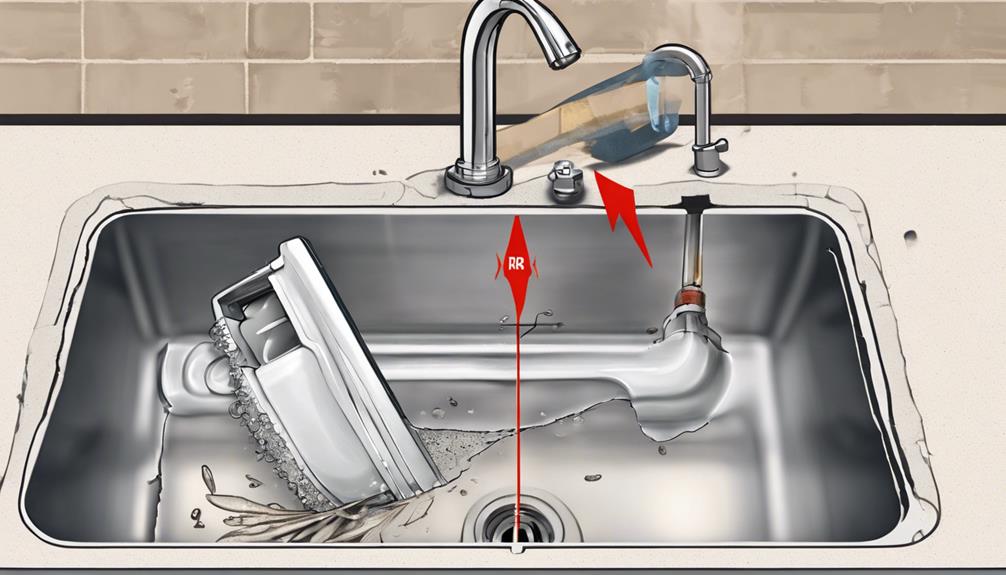
Effective drainage hinges on more than just the pipes below your sink; it also depends on a properly functioning drain vent system. Your kitchen sink's vent allows air to enter the plumbing, balancing pressure and enabling wastewater to flow smoothly. When this vent is blocked or improperly installed, negative pressure can create a vacuum, causing slow drainage or complete clogs.
You might notice gurgling noises, sluggish water flow, or even backups. These are signs that your vent isn't doing its job. A common culprit is debris like leaves or nests obstructing the roof vent. Additionally, snow or ice can temporarily block it in colder climates. Verify your vent pipe extends above the roofline and is free from obstructions.
Another issue could be improper vent installation. If your vent isn't correctly connected or slopes downward, it won't facilitate proper airflow. Sometimes, older homes might not have adequate venting systems, complicating the situation.
To diagnose vent problems, you can inspect the vent stack for visible blockages or consult a professional for a thorough assessment. Ignoring vent issues can lead to frequent clogs and potential damage to your plumbing system.
Prevention Tips
Addressing vent issues is just one part of maintaining a smoothly running kitchen sink. To prevent clogs, you need to be proactive. First, avoid pouring grease, oil, or fat down the drain. They solidify over time, creating blockages. Instead, let them cool and dispose of them in the trash.
Second, use a drain strainer. This tool catches food particles and other debris, preventing them from entering your pipes. Clean the strainer regularly to guarantee it remains effective.
Third, run hot water down the drain after each use. Hot water helps dissolve any residual grease or soap, keeping your pipes clear.
Fourth, consider a monthly maintenance routine using a mixture of baking soda and vinegar. Pour half a cup of baking soda down the drain, followed by half a cup of vinegar. Let it sit for 15 minutes, then flush with hot water.
Conclusion
To keep your kitchen sink drain clog-free, don't let food residues, grease, soap scum, or foreign objects go down the drain. Regularly use a sink strainer and flush your pipes with hot water. Avoid disposing of grease and non-biodegradable items in the sink. Confirm proper installation and check for drain vent issues. Regular maintenance is key—stay vigilant and proactive to prevent clogs and maintain a smoothly running kitchen.